The cookbook

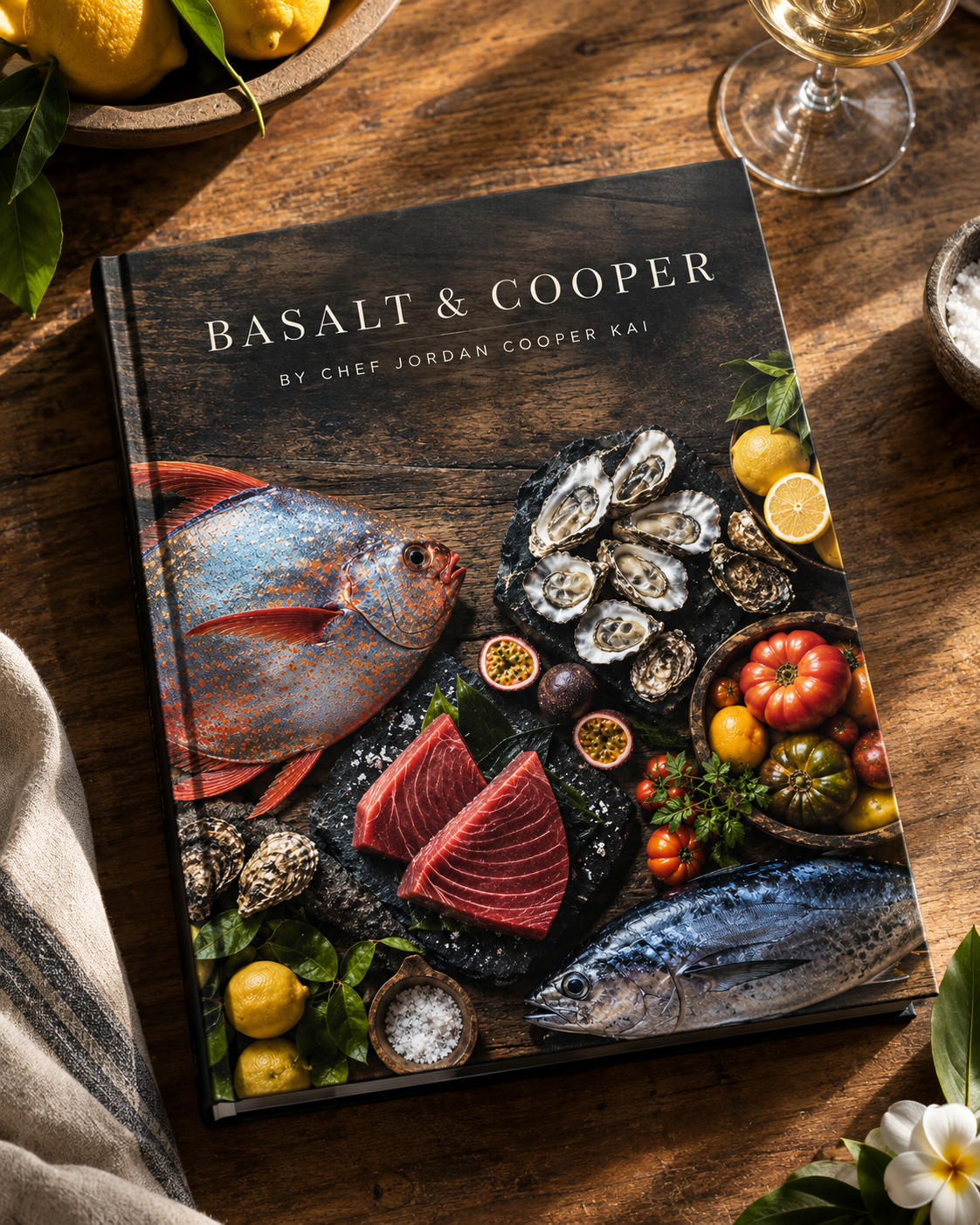
Basalt & Cooper

Signature recipes by Chef Jordan Copper Kai

The food I cook at private tables across Honolulu, finally written down. Island ingredients treated with French patience — fish off the morning boats, fruit at the height of the season, and a dessert chapter that tastes like growing up here. Three of the signature recipes appear below, complete, exactly as I cook them.

Island-forward

Written around what the island catches and grows

Home kitchen

Every recipe tested in a regular, not a restaurant

First edition

A working collection, added to each season

The Basalt & Cooper cookbook by Chef Jordan Copper Kai, lying on a wooden table beside lemons, oysters and fresh fish
Basalt & Cooper — first edition
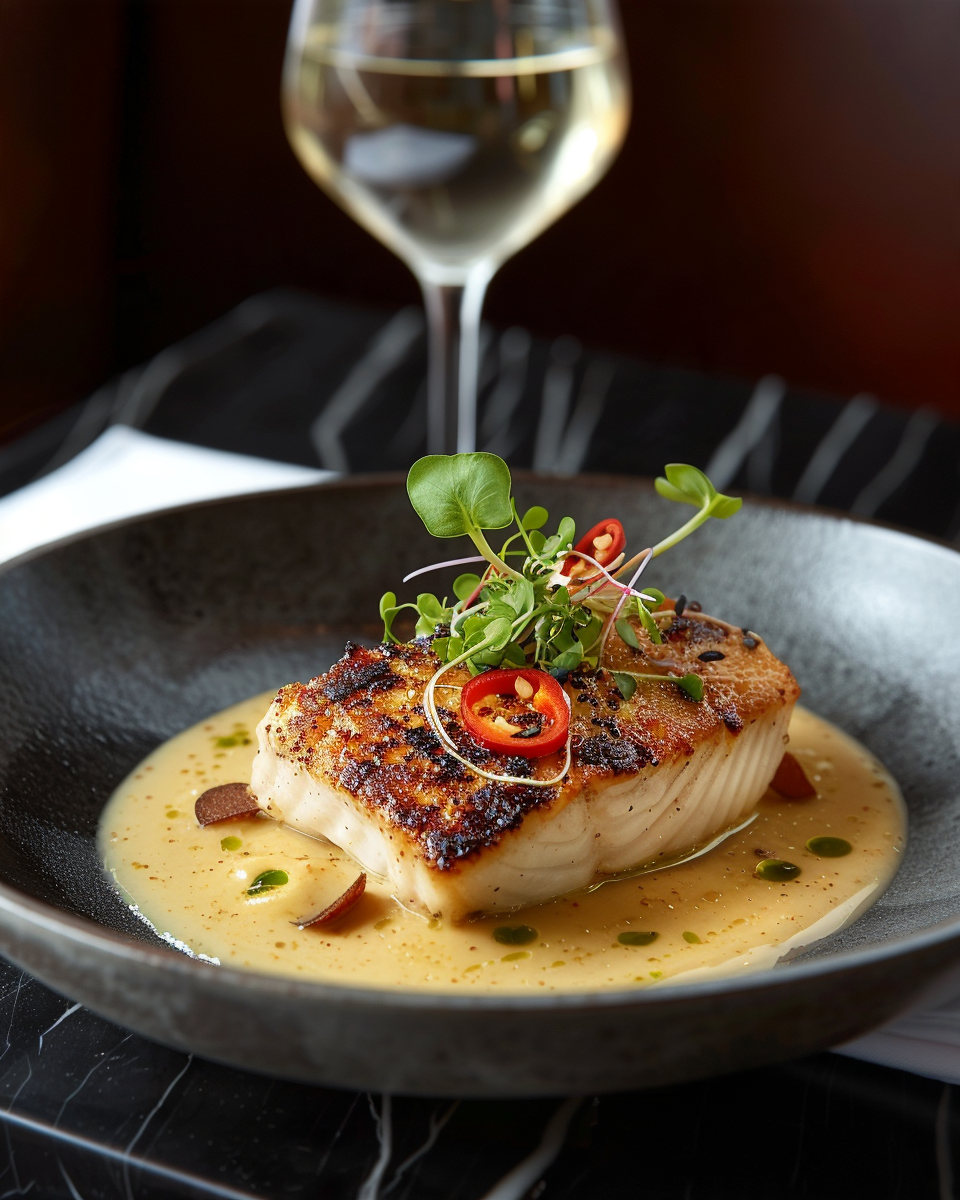
Macadamia-crusted seared opah in a shallow bowl of lilikoʻi beurre blanc, topped with microgreens and pickled chili, with white wine behind
Plate 01 — Seared Opah with Lilikoʻi Beurre Blanc

Recipe 01/Serves 4

Seared Opah with Lilikoʻi Beurre Blanc

Macadamia-Crusted, Charred Limu & Pickled Chili

I caught my first opah off a boat out of Honokōhau before sunrise, and I've never forgotten the color of that fish in morning light — pink and gold, like the sky behind it. This dish is my love letter to that moment: butter-rich French technique wrapped around the brightest, most honest Hawaiian flavor I know, passionfruit. It's the dish I make when I want someone to understand exactly what I mean by “island-forward.”

Ingredients

For the fish

  • 4 opah (moonfish) fillets, 6 oz each, skin removed
  • ¾ cup macadamia nuts, finely chopped
  • ½ cup panko breadcrumbs
  • 2 tbsp fresh chives, minced
  • Zest of 1 lime
  • 2 large eggs, beaten
  • ½ cup all-purpose flour
  • Kosher salt and white pepper
  • 3 tbsp grapeseed oil

For the lilikoʻi beurre blanc

  • ½ cup fresh lilikoʻi (passionfruit) pulp, strained, seeds reserved
  • ¼ cup dry white wine
  • 2 tbsp champagne vinegar
  • 1 small shallot, minced
  • 1 cup unsalted butter, cold, cubed
  • Pinch of kosher salt

For garnish

  • 1 cup fresh limu (ogo), lightly charred
  • 2 tbsp pickled Hawaiian chili, thinly sliced
  • Microgreens or edible flowers, to finish

Method

  1. 01Pat the opah fillets dry and season both sides generously with salt and white pepper.
  2. 02Set up a dredging station: flour in one bowl, beaten eggs in a second, and the macadamia nuts combined with panko, chives, and lime zest in a third.
  3. 03Dredge each fillet in flour, shake off excess, dip in egg, then press firmly into the macadamia-panko mixture to coat evenly on both sides.
  4. 04Heat grapeseed oil in a large skillet over medium-high heat until shimmering. Sear the fillets 2½–3 minutes per side, until the crust is deep golden and the fish is just cooked through. Transfer to a warm plate and tent loosely with foil.
  5. 05For the beurre blanc, combine the white wine, champagne vinegar, shallot, and reserved lilikoʻi seeds in a small saucepan. Simmer over medium heat until reduced by two-thirds, about 5 minutes.
  6. 06Strain the reduction back into the saucepan, discarding the solids. Whisk in the lilikoʻi pulp and return to low heat.
  7. 07Reduce heat to low and whisk in the cold butter a few cubes at a time, letting each addition melt before adding more, until the sauce is glossy and emulsified. Season with a pinch of salt. Remove from heat immediately — do not let it boil.
  8. 08In a dry hot pan, char the limu for 20–30 seconds, just until it crisps slightly at the edges.
  9. 09Spoon the beurre blanc onto warm plates, set the opah on top, and finish with charred limu, pickled chili, and a scatter of microgreens.

If opah isn't available, this crust and sauce are equally stunning on fresh mahi-mahi or onaga.
Chef's note — Jordan Copper Kai
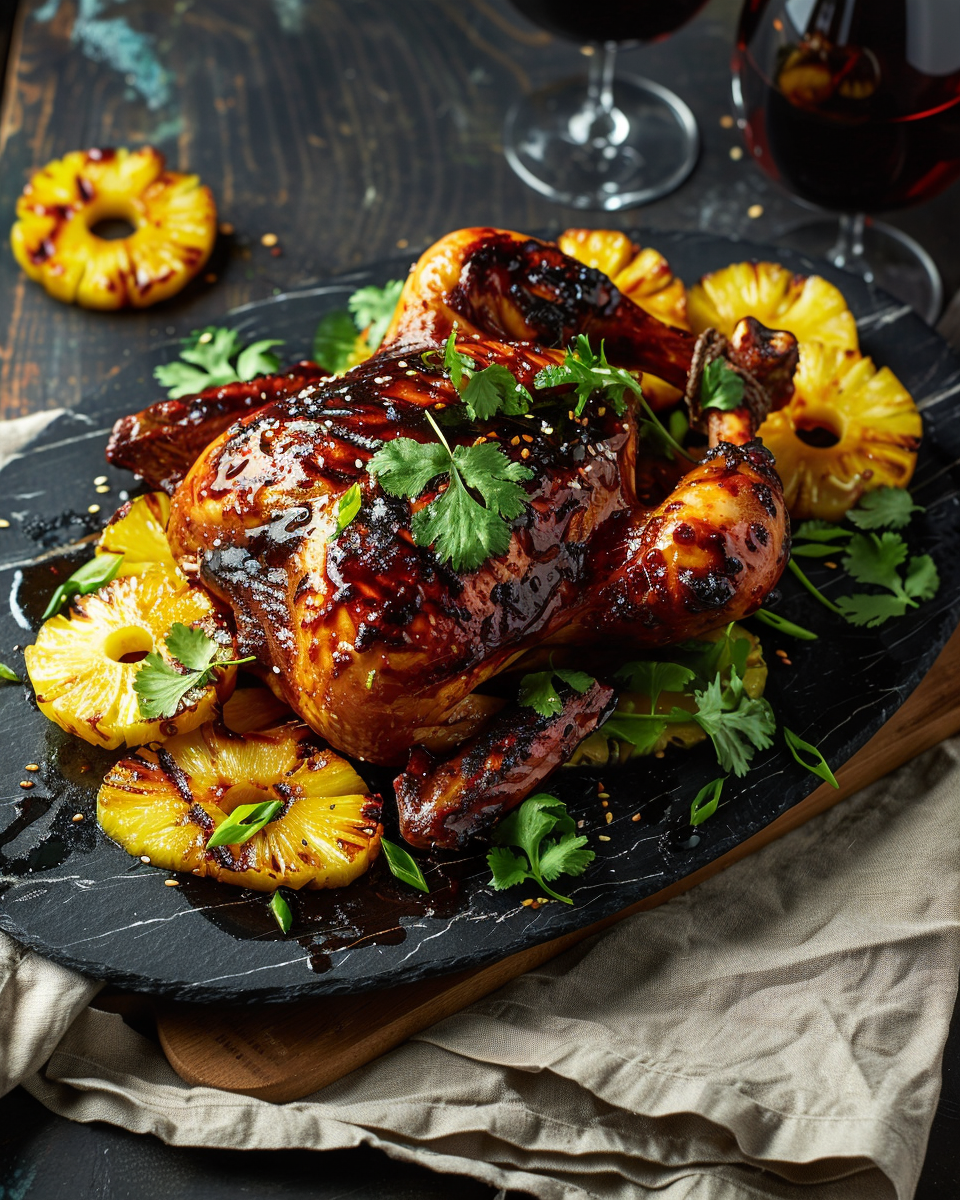
Huli-huli glazed whole roasted chicken on a black slate platter with charred pineapple rounds, cilantro, green onion and red wine behind
Plate 02 — Huli-Huli Spatchcocked Chicken

Recipe 02/Serves 4–6

Huli-Huli Spatchcocked Chicken

Guava-Soy Glaze, Charred Pineapple, Kalo Chips

This one's for the backyard — my grandfather's backyard, specifically, where huli-huli chicken turned on a makeshift grill made from an oil drum every single Sunday of my childhood. I've dressed it up a little for the private dining table, but the soul of it is exactly the same: smoke, sweetness, and a whole lot of people gathered around a fire waiting for their plate.

Ingredients

For the chicken

  • 1 whole chicken (3½–4 lbs), spatchcocked
  • 2 tbsp Hawaiian sea salt
  • 1 tbsp black pepper, freshly cracked

For the huli-huli glaze

  • ½ cup shoyu (soy sauce)
  • ½ cup guava nectar
  • ¼ cup brown sugar, packed
  • ¼ cup ketchup
  • 3 tbsp fresh ginger, grated
  • 4 cloves garlic, minced
  • 2 tbsp rice vinegar
  • 1 tbsp sesame oil

For serving

  • 1 fresh pineapple, cored and sliced into ½-inch rounds
  • 2 cups taro (kalo), very thinly sliced and fried into chips
  • Flaky salt, for finishing
  • Fresh cilantro and green onion, for garnish

Method

  1. 01Season the spatchcocked chicken all over with Hawaiian sea salt and black pepper. Let it sit uncovered in the refrigerator for at least 2 hours, or overnight for the best skin.
  2. 02Whisk together all glaze ingredients in a saucepan. Bring to a simmer over medium heat and cook for 8–10 minutes, until slightly thickened and glossy. Set aside half the glaze for basting and reserve the other half for serving.
  3. 03Prepare a grill for two-zone cooking — hot coals banked to one side, cooler zone on the other.
  4. 04Place the chicken skin-side up over the cooler zone, close the lid, and cook low and slow for 35–40 minutes, basting generously with glaze every 10 minutes.
  5. 05Move the chicken over direct heat for the final 5–8 minutes, skin-side down, to char and crisp. Watch closely — the sugar in the glaze burns fast.
  6. 06Rest the chicken for 10 minutes before carving.
  7. 07While it rests, grill the pineapple rounds directly over the coals, 2 minutes per side, until deeply caramelized.
  8. 08Carve the chicken and arrange over the charred pineapple. Scatter kalo chips over and around, finish with flaky salt, cilantro, and green onion, and serve the reserved glaze on the side.

This is a dish built for a table, not a plate — serve it family-style in the center and let people reach.

Chef's note — Jordan Copper Kai
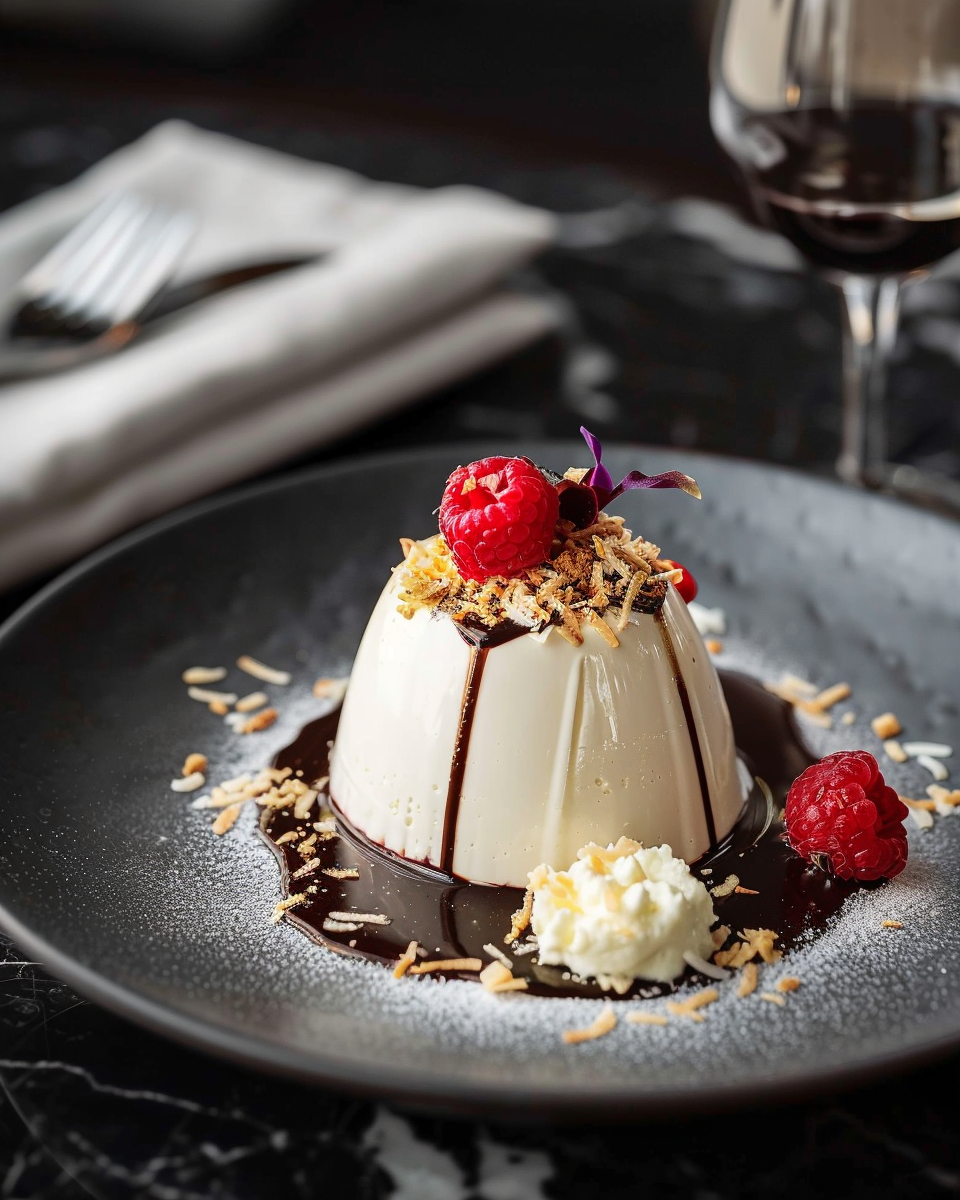
Haupia panna cotta on a dark plate with chocolate drizzle, toasted coconut, mochi crumble, raspberries and a dusting of powdered sugar
Plate 03 — Haupia Panna Cotta

Recipe 03/Serves 6

Haupia Panna Cotta

Toasted Coconut, Hawaiian Chocolate Shard, Brown Butter Mochi Crumble

Haupia was the first dessert I ever made with my mom, standing on a stool at the counter because I couldn't reach otherwise. This is that same coconut pudding, grown up — French technique, a little California restraint on the sweetness, and a crumble on top because I think every dessert deserves something to crunch on.

Ingredients

For the panna cotta

  • 2 cups full-fat coconut milk
  • 1 cup heavy cream
  • ⅓ cup granulated sugar
  • 2½ tsp powdered gelatin
  • 3 tbsp cold water
  • Pinch of kosher salt
  • ½ tsp vanilla bean paste

For the brown butter mochi crumble

  • 4 tbsp unsalted butter
  • ½ cup mochiko (sweet rice flour)
  • ¼ cup brown sugar
  • Pinch of salt

For garnish

  • 2 oz Hawaiian single-origin dark chocolate, shaved into shards
  • ¼ cup toasted coconut flakes
  • Flaky salt

Method

  1. 01Sprinkle the gelatin over the cold water in a small bowl and let bloom for 5 minutes.
  2. 02In a saucepan, warm the coconut milk, cream, sugar, and salt over medium heat, whisking until the sugar dissolves. Do not boil.
  3. 03Remove from heat and whisk in the bloomed gelatin and vanilla bean paste until fully dissolved and smooth.
  4. 04Divide the mixture evenly among six glasses or ramekins. Refrigerate uncovered for at least 4 hours, or until fully set.
  5. 05For the crumble, melt the butter in a skillet over medium heat and continue cooking, swirling often, until it turns amber and smells nutty, about 3–4 minutes.
  6. 06Stir in the mochiko, brown sugar, and salt directly into the brown butter, mixing until it forms small, even clusters. Spread onto a parchment-lined baking sheet.
  7. 07Bake at 325°F for 10–12 minutes, stirring halfway through, until golden and crisp. Cool completely — the crumble will firm up as it sits.
  8. 08To serve, top each panna cotta with a scatter of brown butter mochi crumble, a few shards of dark chocolate, toasted coconut, and a light pinch of flaky salt.

These can be made up to two days ahead — just add the crumble and garnish right before serving so it stays crisp.

Chef's note — Jordan Copper Kai

Read it, then eat it

Or let me cook it for you.

Every recipe in Basalt & Cooper started life at a private table in Honolulu. Bring the book to dinner — or skip the dishes and have the chapters cooked in your own kitchen, one night at a time.